
Our Top Ten Plants for October 2026
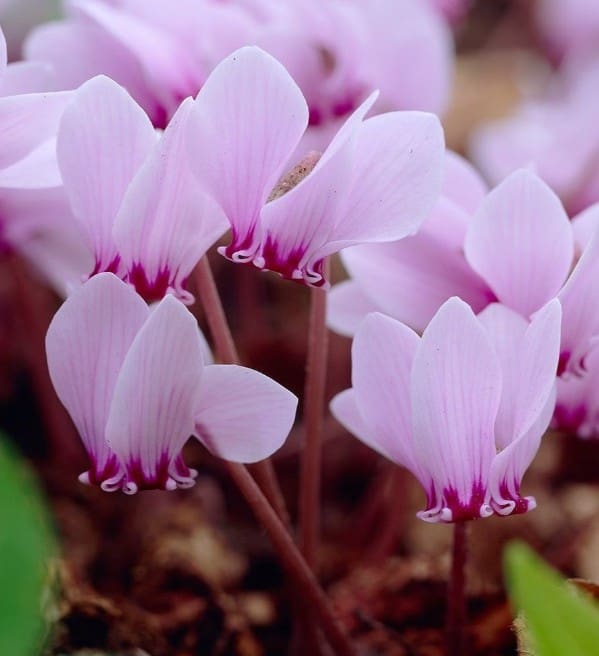
Cyclamen hederifolium
Soil type: Well-drained, humus-rich soil, preferably moderately fertile. It tolerates neutral to alkaline soils and does well in stony or woodland-type ground. Avoid waterlogged soils.
Planting aspect: Partial shade to full shade. Excellent beneath deciduous trees and shrubs, where it receives light in autumn/winter but shade in summer.
Height: Approximately 10-15 cm.
Spread: Approximately 15-20 cm per plant; colonies can gradually spread wider over time.
Habit: Low-growing perennial with marbled, heart-shaped foliage. Leaves generally appear around or after flowering.
Flowers: Pink to rosy-pink flowers, typically late summer to autumn.
Hardiness: Fully hardy in most UK gardens once established.
Landscape use: Ideal for woodland planting, beneath deciduous trees, shady borders, rock gardens and naturalised areas. Plant the tubers relatively shallowly, with the top of the tuber close to or just below the soil surface.
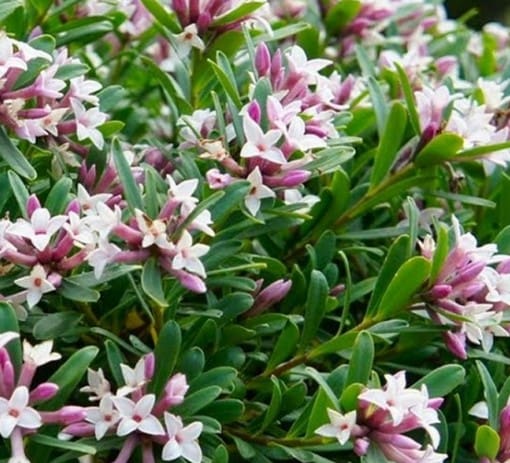
Daphne Eternal Fragrance
Soil type: Moist but well-drained, fertile soil. Tolerates most soil types, including neutral and mildly alkaline soils. Avoid waterlogged conditions.
Planting aspect: Full sun to partial shade. A sheltered position is recommended, particularly in colder or exposed locations.
Height: Approximately 1-1.5 m at maturity.
Spread: Approximately 1-1.2 m at maturity.
Habit: Compact, upright, evergreen shrub with attractive variegated green-and-white foliage.
Flowers: Small, fragrant, dark purple flowers may appear in late spring.
Hardiness: Generally hardy in sheltered UK gardens; protection from severe frost and cold winds is beneficial.
Landscape use: Suitable for mixed borders, formal planting, containers, low screening and contemporary garden schemes. Its compact habit and variegated foliage provide year round structure and contrast.
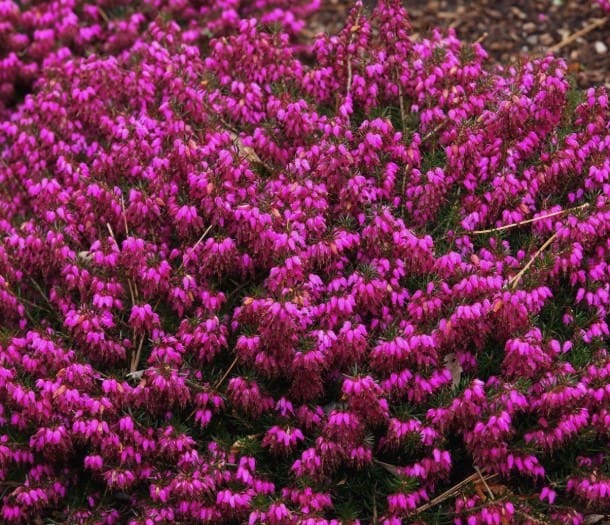
Erica Carnea
Soil type: Well-drained, acidic to neutral soil, preferably sandy or gritty and moderately fertile. It can tolerate poorer soils but dislikes waterlogging.
Planting aspect: Full sun to partial shade. Full sun generally gives the best flowering and compact growth.
Height: Approximately 15-30 cm at maturity.
Spread: Approximately 30-45 cm at maturity.
Habit: Low-growing, spreading evergreen/semi-evergreen shrub with fine, needle-like foliage.
Flowers: Small bell-shaped flowers, commonly pink, purple or white, appearing mainly from winter to early spring.
Hardiness: Fully hardy in most UK gardens.
Landscape use: Excellent for rock gardens, heath gardens, banks, borders, containers and low groundcover. It is particularly valuable for providing colour during winter and early spring.
Euonymous white spire
Soil type: Moist but well-drained, fertile soil. Tolerates most soil types, including acidic, neutral and alkaline soils. Avoid prolonged waterlogging.
Planting aspect: Full sun to partial shade. A sheltered position is preferable: good light helps maintain the attractive variegated foliage.
Height: Approximately 1-1.5 m at maturity.
Spread: Approximately 0.5-1 m wide.
Habit: Upright, compact, evergreen shrub with narrow green leaves edged/marked with creamy white.
Flowering: Small, inconspicuous greenish-white flowers may appear in summer.
Hardiness: Generally hardy in UK gardens, although protection from severe, cold winds is beneficial.
Landscape use: Particularly suitable for formal borders, low hedging, containers and mixed evergreen planting. Its narrow, upright habit makes it useful where planting space is limited.
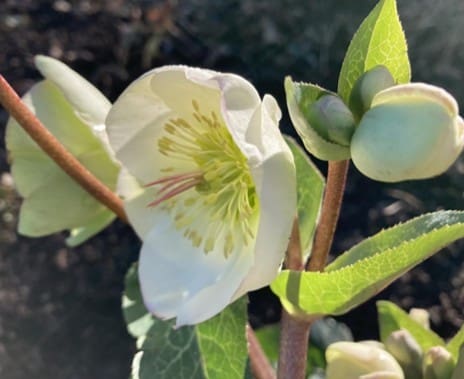
Helleborus winter angels
Soil type: Moist, fertile and well-drained, humus-rich soil. Neutral to alkaline soil is generally preferred, although hellebores tolerate a range of soils. Avoid waterlogged conditions.
Planting aspect: Partial shade to full shade. A sheltered position with some winter/spring light is ideal. Avoid hot, drying summer sun.
Height: Approximately 30-45 cm at maturity.
Spread: Approximately 30-45 cm at maturity.
Habit: Compact, clump-forming evergreen/semi-evergreen perennial with leathery foliage.
Flowers: Attractive cup-shaped flowers, generally appearing from late winter to spring, depending on cultivar.
Hardiness: Fully hardy in most UK gardens.
Landscape use: Excellent for shaded borders, woodland planting, under deciduous trees and winter-interest planting. Plant in groups for a stronger seasonal display.
Planting note: Hellebores benefit from incorporating organic matter into the planting area and keeping the soil consistently moist but well drained.
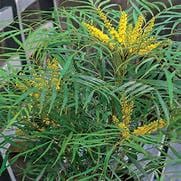
Mahonia soft caress
Soil type: Moist, fertile and well-drained soil. Tolerates a range of soil types, including acidic, neutral and mildly alkaline soils. Avoid waterlogged ground.
Planting aspect: Partial shade to full shade is ideal. It can tolerate some sun if the soil remains moist, but otect from strong afternoon sun and drying winds.
Height: Approximately 1-1.5 m at maturity.
Spread: Approximately 1-1.2 m at maturity.
Habit: Upright, compact, evergreen shrub with soft, narrow, fern-like foliage.
Flowers: Fragrant, pale yellow flowers, generally appearing in autumn.
Hardiness: Generally suitable for UK gardens, although shelter is beneficial in exposed sites.
Landscape use: Mahonia 'Soft Caress' is particularly useful for shady borders, woodland planting, containers and modern planting schemes. Its architectural foliage provides strong evergreen interest throughout the year.
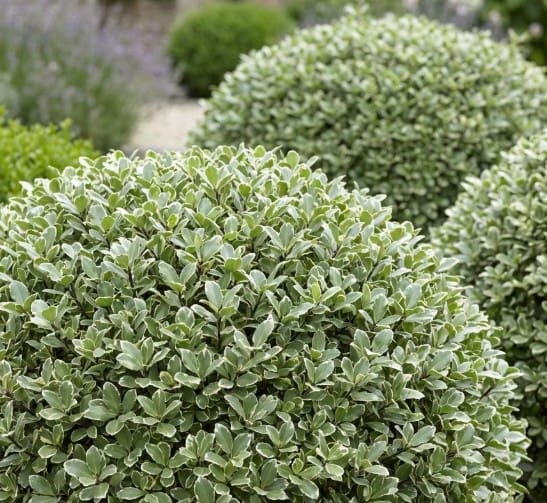
Pittosporum snowball
Soil type: Fertile, well-drained soil; tolerates clay, loam and sandy soils. Avoid permanently waterlogged ground.
Soil pH: Slightly acidic to neutral, but generally adaptable.
Planting aspect: Full sun to partial shade. A sheltered position is preferable, particularly in colder or exposed
Mature height: Approximately 1-1.5 m
Mature spread: Approximately 1-1.5 m
Habit: Compact, rounded, evergreen shrub; useful for low hedging, borders and containers.
Spacing: For a continuous planting, roughly 60-90 cm apart, depending on how quickly you want the plants to knit together.
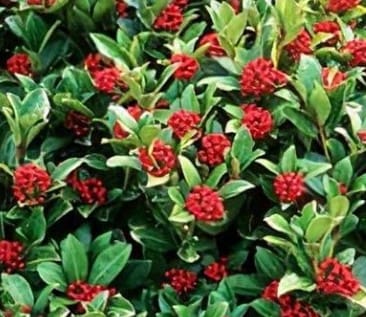
Skimmia Reevesiana
Soil type: Moist, fertile and well-drained, preferably acidic to neutral soil. Avoid strongly alkaline/chalky soils.
Planting aspect: Partial shade to full shade. A sheltered position is ideal; protect from strong, hot afternoon sun and drying winds.
Height: Approximately 1-1.5 m at maturity.
Spread: Approximately 1-1.5 m at maturity.
Habit: Compact, bushy evergreen shrub with glossy green foliage.
Flowers: Small, fragrant white flowers in spring.
Berries: Attractive red berries in autumn/winter, particularly when pollinated.
Landscape use: Skimmia reevesiana is well suited to shady borders, woodland gardens, containers and underplanting beneath trees. Its evergreen foliage and winter berries provide year-round interest.
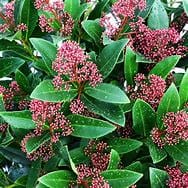
Skimmia rubella
Soil type:
Moist but well-drained, acidic to neutral soil. Rich, humus-filled soil is ideal. Avoid chalky/alkaline soils unless amended.
Planting aspect:
Partial shade to full shade. A sheltered position is best; avoid hot afternoon sun, especially in dry conditions.
Height:
Approximately 1-1.5 m at maturity.
Spread:
Approximately 1-1.5 m wide.
Habit:
Compact, bushy, evergreen shrub with glossy dark-green leaves.
Flowering:
Red/pink flower buds appear in winter and open to fragrant white flowers in spring.
Hardiness:
Generally hardy in the UK, particularly in a sheltered garden position.
Garden use: 'Rubella works particularly well in woodland-style planting, shaded borders, containers, and under trees. It is also useful for providing year-round evergreen structure.
Note: 'Rubella' is a male cultivar, so it produces prominent flower buds but does not produce berries.
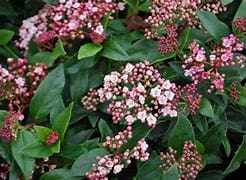
Viburnum tinus
Soil type: Moist, fertile and well-drained soil. Tolerates acidic, neutral and alkaline soils, including chalky soils. Avoid prolonged waterlogging.
Planting aspect: Full sun to partial shade. A sheltered position is preferable, particularly from cold, drying winds.
Height: Approximately 2-3 m at maturity; can grow larger if left unpruned.
Spread: Approximately 2-3 m at maturity.
Habit: Dense, bushy, evergreen shrub with glossy dark-green foliage.
Flowers: Clusters of white/pale pink flowers, typically from late winter into spring.
Fruit: Blue-black berries can follow the flowers, depending on cultivar and pollination.
Landscape use: Suitable for hedging, screening, mixed borders, coastal gardens and wildlife-friendly planting. It tolerates shade better than many evergreen shrubs.